How to Stage an Intervention: A Family Guide
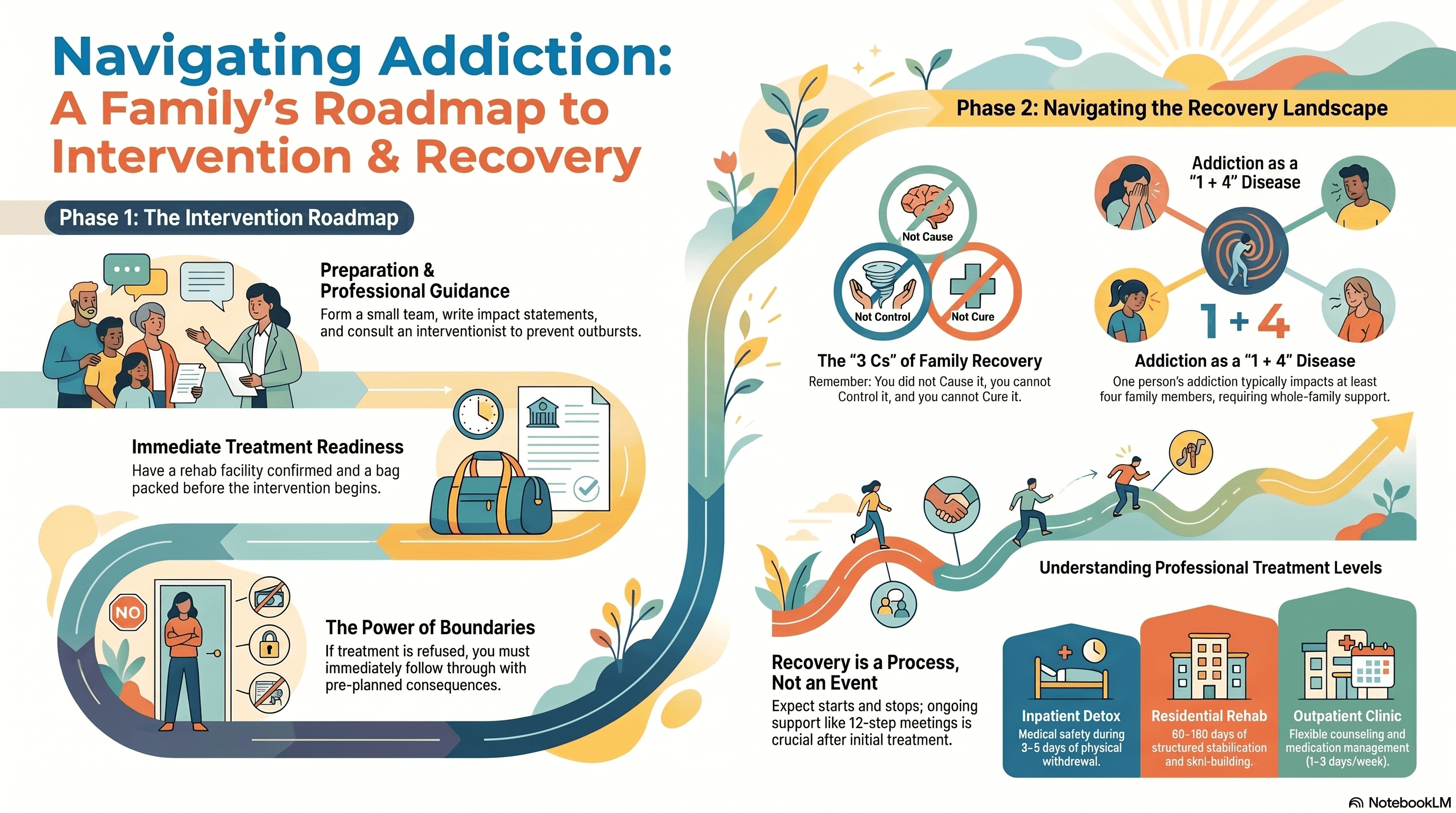
When a loved one cannot see the harm their addiction is causing, families sometimes consider an intervention — a planned conversation designed to encourage them to accept help. Done well, an intervention can be a turning point. Done poorly, it can backfire. This guide covers how to approach it thoughtfully.
First, consider whether an intervention is the right step
An intervention is not always necessary. Often a calm, private, one-on-one conversation is enough to open the door. Consider a formal intervention when previous conversations have failed, when the situation is escalating, or when several people who care about the person want to present a united message. The goal is always to move the person toward help, not to shame or corner them.
Consider professional help
A trained interventionist or addiction professional can dramatically improve the odds of success. They help plan the conversation, coach participants, keep emotions from derailing it, and have treatment lined up so the person can act immediately. For complex situations — for example, where there is a co-occurring mental illness, a history of violence, or high overdose risk — professional guidance is strongly recommended.
Plan before you act
- Arrange treatment in advance: have an assessment scheduled or a bed identified so 'yes' can happen immediately. An intervention that ends with no plan loses its momentum.
- Choose the right people: a small group the person trusts and respects — not anyone who is highly volatile or has their own active addiction.
- Pick a private, calm time and place, when the person is sober.
- Prepare what each person will say, and agree on the message and the boundaries beforehand.
- Anticipate reactions: denial, anger, and defensiveness are common. Plan to stay calm and on-message.
What to say
The tone should be loving and concerned, not accusatory. Effective messages share a common structure:
- Express love and care first — make clear this comes from concern, not judgment.
- Share specific examples of how the addiction has affected you and them, using 'I' statements ('I was scared when...') rather than blame.
- Make a clear, direct request: that they accept the help that is ready right now.
- State boundaries honestly — what you will and will not do going forward — and only commit to boundaries you will keep.
Set boundaries you can keep
Boundaries are not threats; they are statements of what you will do to protect yourself and stop enabling. They only work if you follow through. Decide in advance what each participant is prepared to do, and be honest about it during the conversation.
If they say no
Not every intervention ends with immediate acceptance, and that does not mean it failed. You have planted a seed, communicated your love and your limits, and made the path to help clear. Keep the relationship intact, follow through on your stated boundaries, and leave the door open. Many people accept help after more than one conversation.
Take care of yourself, too
Interventions are emotionally intense for everyone involved. Family support groups and your own counseling can help you prepare, process, and stay steady — which ultimately makes you a stronger support for your loved one.
Frequently asked questions
Do I need a professional interventionist?
Not always, but a trained interventionist greatly improves the odds, especially in complex situations involving co-occurring mental illness, a history of violence, or high overdose risk. They help plan, coach participants, and keep the conversation on track.
What if my loved one refuses help?
A 'no' does not mean failure. You have communicated your concern, made the path to help clear, and stated your boundaries. Keep the relationship intact, follow through on those boundaries, and stay open — many people accept help after more than one conversation.