What to Know Before Going to Rehab: A Complete Guide
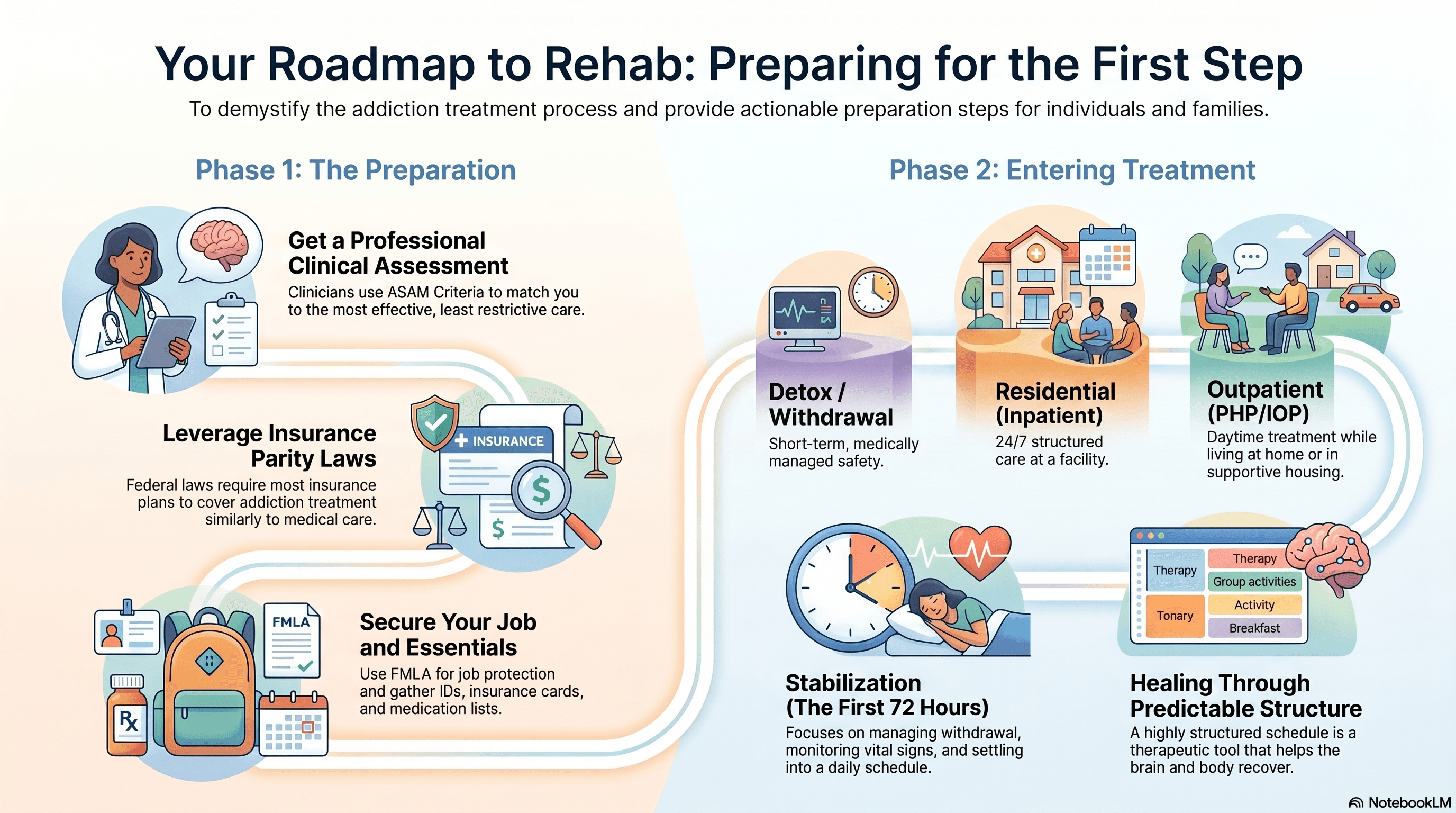
Deciding to go to rehab is one of the most important steps a person can take toward recovery — and it is also one of the most uncertain. Knowing what to expect makes the process far less intimidating. This guide walks through how treatment works, how to get admitted quickly, what to bring, and what the first week typically looks like.
Understanding 'rehab' and evidence-based treatment
Rehab is not a single, isolated event; rather, it is an umbrella term for a continuum of care tailored to an individual's specific needs, substance use severity, and physical or mental health. Modern treatment is evidence-based, relying on highly researched approaches that combine behavioral therapies, medication, peer support, and concurrent treatment for mental health conditions like anxiety, trauma, or depression.
The four steps to treatment preparation
Step 1: Clinical assessment
The journey begins with an assessment by a licensed clinician who evaluates your physical and mental health, substance use history, and living situation. In many states, this process is guided by the ASAM Criteria, a national standard used to match individuals to the most effective and least restrictive treatment setting. You do not need to diagnose yourself prior to this assessment.
Step 2: Determining the level of care
Treatment intensity is categorized into several levels:
- Medically managed detox: short-term, medically supervised care designed to safely manage withdrawal symptoms.
- Residential / inpatient (ASAM 3.1–3.7): 24/7 structured care where the patient lives at the facility.
- Partial hospitalization (PHP): a full daytime schedule of treatment, while the patient lives at home or in supportive housing.
- Intensive outpatient (IOP): treatment lasting several hours a few days a week, meant to accommodate work or family schedules.
- Standard outpatient: weekly therapy combined with medication management for ongoing, long-term recovery.
Step 3: Payment and insurance
Navigating costs is a primary concern, but federal and state parity laws mandate that most insurance plans cover substance use treatment comparably to standard medical care. Medicaid also covers a broad range of treatments in many states. Reputable facilities will verify your insurance benefits for free and clearly explain any out-of-pocket costs prior to admission.
Step 4: Practical preparation
Preparing practically helps minimize stress on admission day. Key tasks include:
- Arranging time away: speaking to an employer (FMLA laws may protect your job) and securing care for children, pets, and bills.
- Gathering documents: bringing a photo ID, insurance cards, medical records, and a list of current medications.
- Packing: bringing simple, comfortable clothing, unopened non-alcohol-based toiletries, and a small amount of cash.
- Communication: leaving a contact number and your expected length of stay with a trusted friend or family member.
The treatment experience
The first 24–72 hours
This period is focused on safety and stabilization. If detox is necessary, a medical team monitors vital signs and manages withdrawal. It is entirely normal to feel anxious, emotional, or exhausted during this intake and settling phase.
The daily routine
Once stabilized, treatment relies on highly structured days filled with group therapy, individual counseling, education, and psychiatric care. This predictability is an intentional feature that helps the brain and body recover.
Mindset and long-term success
You do not need to feel 100% motivated to start rehab; many arrive ambivalent but find their footing once supported. The two strongest predictors of success are being honest with your care team and committing to the recommended length of care, as leaving early drastically increases the risk of relapse. Ultimately, rehab provides the foundation, skills, and medications for a lifelong recovery plan after discharge.
Slides
Frequently asked questions
How long does rehab last?
It varies by need. Detox is typically a few days to a week; residential programs commonly run 28–90 days; outpatient care can continue for months. Research generally associates longer engagement in care with better outcomes.
Can I bring my phone?
Policies differ by facility. Some allow limited phone access on a schedule; others restrict it early in treatment to reduce distractions. Ask the program about its policy before you arrive.
What if I have a job or kids?
Many people use FMLA job protection for residential care, or choose outpatient programs (IOP/PHP) that fit around work and family. Tell the assessor about your obligations so they can recommend a workable option.