Recovery Housing and Sober Living: A Practical Guide
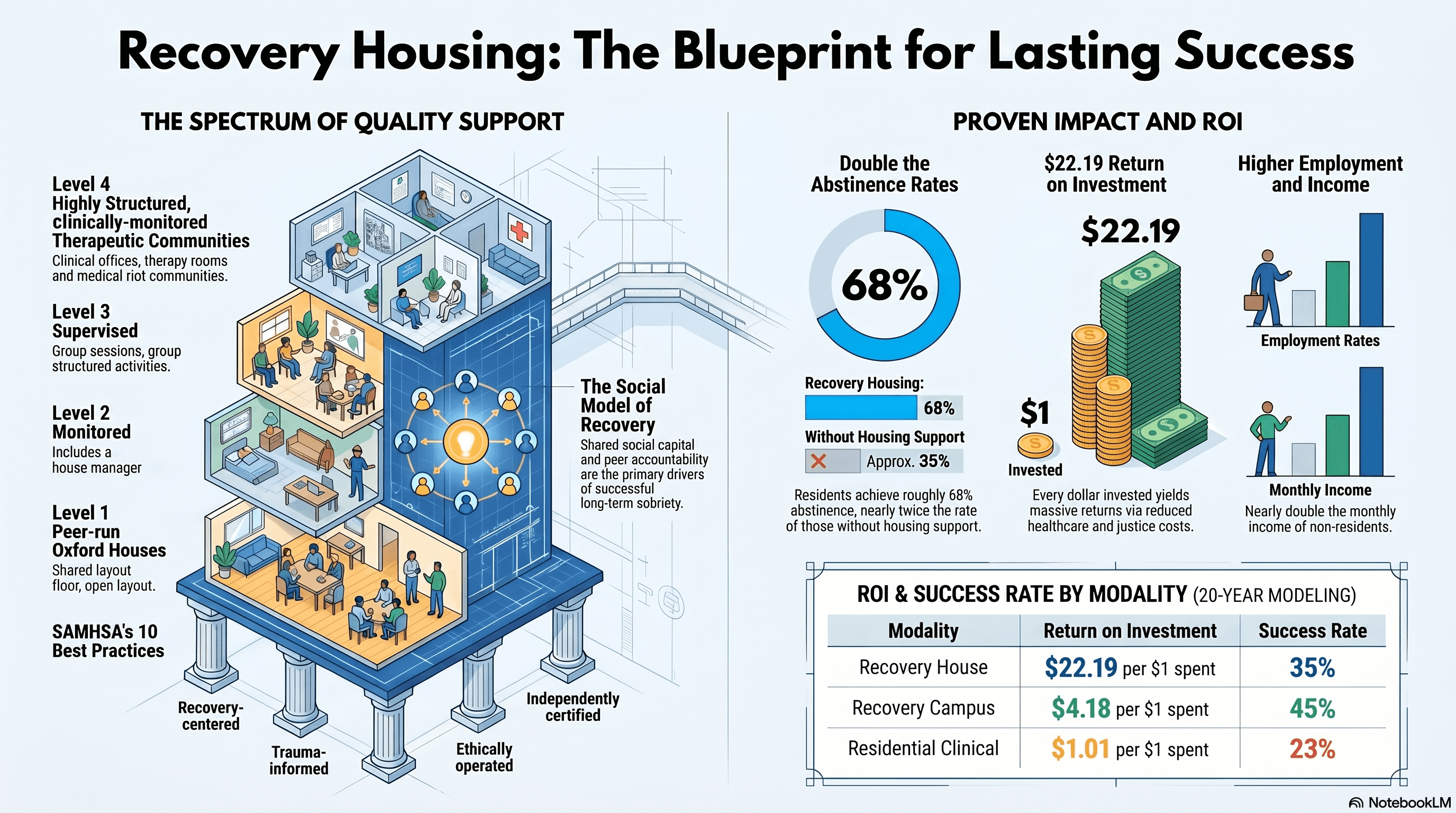
For many people, returning straight home after treatment means returning to the same triggers and stresses that fueled their substance use. Recovery housing — also called sober living — offers a substance-free, supportive place to live during the vulnerable months of early recovery. This guide explains how it works and how to choose a good one.
What recovery housing is
Recovery housing is a substance-free residence where people in recovery live together and support one another. It is not formal treatment — residents typically work, attend outpatient programs, or go to meetings during the day — but it provides structure, accountability, and community. Homes usually have house rules, expectations around meetings or work, and consequences for substance use.
Who it helps
Recovery housing is especially valuable for people who:
- Are transitioning out of residential treatment and not ready to return to an unstable or triggering home.
- Lack a safe, substance-free living environment.
- Benefit from peer accountability and routine in early recovery.
- Want to rebuild independence gradually with support nearby.
Where it fits in the continuum
Recovery housing often runs alongside outpatient care (IOP or standard outpatient) as part of an aftercare plan. Someone might complete residential treatment, move into a sober living home, attend IOP a few times a week, continue medication, and go to support meetings — all at once. The housing provides the stable foundation that makes the rest work.
How to choose a quality home
Quality varies widely, so it pays to ask questions before moving in:
- Is the home certified by a recognized recovery-housing standard or state affiliate? Certification signals adherence to quality and safety standards.
- What are the rules, and how are they enforced? Clear, consistently applied rules are a good sign.
- Is the environment genuinely substance-free, with drug testing?
- Does it support — or at least allow — medication for addiction (MAT)? Avoid homes that bar residents from taking prescribed MAT, as this can be unsafe and discriminatory.
- What are the costs, and what do they include?
- What does the community feel like, and is there a house manager or peer leadership?
A note on MAT-friendly housing
Some sober living homes historically refused residents on methadone or buprenorphine. This is both medically counterproductive and, in many places, legally problematic. Effective recovery housing supports residents who are taking prescribed medication for their condition. If a home will not allow prescribed MAT, consider it a red flag.
Making the most of it
Recovery housing works best when residents engage fully — building relationships, following the structure, attending meetings and treatment, and taking on responsibilities. The peer community is the active ingredient: living alongside others who understand the journey reduces isolation and reinforces new habits.
Slides
Frequently asked questions
Is recovery housing the same as rehab?
No. Recovery housing (sober living) is a substance-free place to live with peer support and structure, but it is not formal treatment. People in recovery housing often attend outpatient programs and meetings separately.
Can I take MAT in a sober living home?
You should be able to. Effective recovery housing supports residents taking prescribed medication for opioid or alcohol use disorder. A home that bars prescribed MAT is a red flag.